
Which AI should you choose? This is the real difference between Claude, ChatGPT, Gemini and Mistral
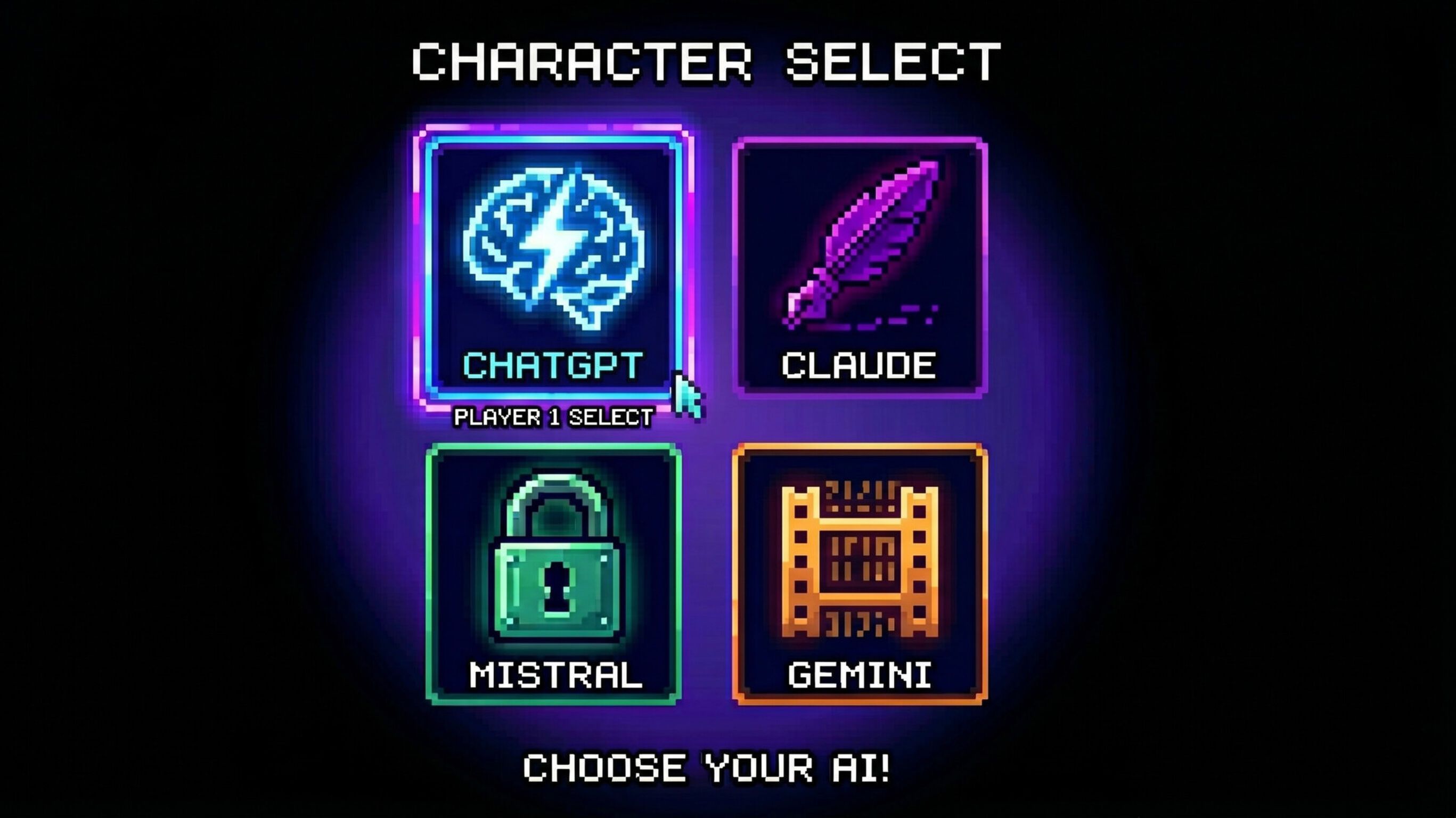
Everyone knows ChatGPT. Even people who never use it know roughly what it is. But by now, that has long since ceased to be the only serious AI tool.
Claude, Gemini and Mistral are popping up more and more in conversations, demos and software choices. Only one question lingers for many people: what is really the difference?
Because yes, they can all write texts, summarize, answer questions and think along. But that's also where the comparison ends. One is better at writing. Another excels at voice. Yet another is stronger in video, European data storage or specialized models for specific tasks.
So no, it's no longer just about which AI is "smartest." The real question is simpler and more useful: which AI best suits what you want to do?
TL;DR
- ChatGPT is the best all-rounder: Strong in voice, images, search, research and general everyday use.
- Claude is strongest in writing and long documents: Fine for texts, rewriting, summarizing and working with a lot of context.
- Gemini is especially strong in Google and video: Useful if you work a lot with Gmail, Drive and other Google tools. And if you want to generate video.
- Mistral is interesting for privacy, European data and modular AI processes: Strong for organizations that value control, European positioning and specialized models.
- The smartest choice is not one model for everything: The best approach is usually: choosing the right model per task.
Why this equation has become more important
A while ago, it was simple. You picked an AI tool and used it for just about everything. A text here, a summary there, sometimes a brainstorm or some help with code.
Those days are gone.
AI tools still look alike on the outside, but under the hood the differences are growing. Not just technical, but mostly practical. One tool feels better for writing. Another helps you faster with voice or search. Yet another is more interesting if you want to automate processes or have to consider data storage and privacy.
That immediately makes the choice more important. Those who use the wrong tool don't necessarily get bad output. But often less good output than was needed.
The four major players, briefly explained
ChatGPT. The best all-rounder
If you had to choose one AI tool for daily use, ChatGPT is still the safest choice for most people.
Why? Because it is simply strong on many fronts. ChatGPT is good at writing, good at summarizing, strong at search, fine at research and very useful in voice. On top of that, image generation is also a definite strength. As a result, it feels like the most complete AI tool of the bunch.
ChatGPT is not always the best in every single part. But it is the one that most often delivers "good enough plus extra."
Use ChatGPT especially if you:
- want a strong all-rounder
- like to work with voice
- want to create images
- want to search and explore quickly
- want one tool for many different tasks
Claude. The strongest in writing and long documents
Claude is the tool many people choose as soon as text becomes more important than gimmicks.
The standard writing style often feels calmer, more natural and less forced. Especially if you work a lot with articles, rewriting, structuring or long documents, Claude often feels more comfortable. The model keeps a good overview of large amounts of text and is strong on nuance, tone and structure.
On the other hand, Claude makes less sense if you're looking for image generation, video or a strong Dutch voice experience.
Use Claude especially if you:
- write a lot
- want to analyze long documents
- want to rewrite or improve texts
- find a more natural writing style important
Gemini. Strong in Google and remarkably good in video
Gemini is especially interesting if you already live a lot in the Google ecosystem. Think Gmail, Drive, Docs and other Google tools. In that context, Gemini feels logical, fast and convenient.
In addition, Gemini has a distinct advantage that the others in this comparison do not have in the same way: video. Whereas ChatGPT, Claude and Mistral are mostly on text, images and agents, Gemini also has a serious story around video generation.
That makes Gemini especially interesting for people who don't just want to write or search, but also want to work multimodally.
Use Gemini especially if you:
- work a lot with Google
- Want to cleverly combine Gmail and Drive with AI
- want to generate video
- are looking for a strong multimodal tool
Mistral. Strong in control, Europe and specialist deployment
Mistral is less well known to the general public than ChatGPT, Claude or Gemini. But don't underestimate this player.
Whereas the other three are mainly known as great consumer products, Mistral is precisely of interest to companies and teams that look beyond just a chat window. Think European positioning, data storage, control, smaller models via API and specialized deployment for concrete processes.
This makes Mistral less the tool that people spontaneously open to ask something. It is more often the tool that becomes interesting once AI really becomes part of your services, infrastructure or process design.
Use Mistral especially if you:
- value European data
- want more control over AI deployment
- need smaller specialist models
- Want to incorporate AI into processes
The differences in one table
|
Topic |
Claude |
ChatGPT |
Gemini |
Mistral |
|
Generate images |
No |
Yes |
Yes |
Yes |
|
Generate Video |
No |
No |
Yes |
No |
|
Voice / live talk |
Limited |
Strong |
Strong |
Present, but less leading |
|
Audio transcribing |
No clear strong proposition |
Yes |
Yes |
Yes |
|
Dutch in voice / transcription |
Weaker |
Good |
Good |
Usable |
|
Writing style standard |
Natural and calm |
Strong, but sometimes generic |
Clear and functional |
Short and direct |
|
Long documents |
Very strong |
Good |
Very strong |
Good |
|
Working with local files and folders |
Strong |
Limited |
Mainly within Google |
Less desktop-oriented |
|
Search / web search |
Good |
Strong |
Very strong |
Good |
|
Multi-step tasks / agents |
Strong |
Strong |
Strong |
Strong |
|
Data storage / origin |
American |
American |
American |
European |
|
Privacy / control |
Strong |
Good |
Good |
Very strong |
|
Smaller models via API |
Yes |
Yes |
Yes |
Yes |
|
Suitable for specific tasks in processes |
Good |
Strong |
Strong |
Very strong |
Which AI do you use for what?
The easiest way to remember this equation is not by brand, but by task.
Want to write or improve a long text?
Then usually choose Claude.
Claude often feels most comfortable when working with tone, structure, rewriting and long context. For blogs, articles, proposals and text improvement, it is often a very strong choice.
Want an all-around tool for everyday use?
Then choose ChatGPT.
ChatGPT is most complete for people doing many different things. Just talking, looking something up, creating an image, asking for a summary or getting an idea developed. That very breadth is what makes it so strong.
Do you work a lot in Google or want to generate video?
Then choose Gemini.
Gemini becomes extra interesting if your workday is already running on Google. And as soon as video starts playing a role, Gemini jumps to the fore even more clearly.
Want more control, European positioning or specialized models?
Then look to Mistral.
Mistral is especially strong once AI needs to be more than a stand-alone tool. For example, if you want to build, integrate, segment or smartly deploy different models in processes.
You don't have to choose one AI
Perhaps the most important conclusion of this whole story: you don't have to be loyal to one model at all.
In fact, that's usually not even smart.
Many people use ChatGPT for speed, voice and general tasks. Claude for writing and long text. Gemini for Google work and video. And Mistral for processes, control and European deployment.
The best AI does not exist. The best choice by task does
Anyone who asks which AI is the best is actually asking the wrong question.
There is no one winner for everything.
ChatGPT is the strongest all-rounder. Claude excels at writing and long documents. Gemini has a clear edge when Google and video are important. Mistral is extra interesting once control, European positioning and specialist deployment become important.
So no, the smartest choice is not to go blindly for one name. The smartest choice is knowing which tool fits the work in front of you.
With Sterc.ONE, you don't choose one AI, but the right model for the job
The real win is not in choosing one model and hoping it's good enough for everything.
The real win is in being able to choose the right model for the right task.
With Sterc.ONE, you don't have to keep rethinking whether it's better to use ChatGPT, Claude, Gemini or Mistral. You choose the model that best fits each issue.
Do you want to write, summarize or analyze a long document? Then you choose a model that excels at that. Do you need transcription, image, search, video or a specialized process? Then you choose another model better suited for that.
This way, you don't use AI as one general tool, but as a smart layer in which you always deploy the right model at the right time.
That produces better output, more grip on quality and an approach that fits real processes much better.
More than just access to multiple models
The beauty of Sterc.ONE is that it doesn't stop at model selection alone.
If you choose ONE, you can add colleagues an unlimited number of times without having to take out a separate subscription for each additional user. That makes it more scalable and manageable than if everyone starts using separate tools themselves.
In addition, you work with version control in your company prompt library. This means that your prompts, instructions and working methods are not scattered over separate accounts, chats and documents, but can be managed and developed centrally. That way you keep a grip on quality, consistency and further development.
We can also immediately set up a number of permanent assistants for you within Sterc.ONE. Think of it as the alternative to OpenAI GPTs, Gemini Gems, Claude Projects or Mistral Agents, but then set up for your own organization, processes and use cases.
That way, you avoid having everyone constantly having to figure out how something works themselves. Instead, you instantly give teams a set of smart assistants that are ready for their daily work.
Why that makes a lot of difference in practice
Once AI is used more broadly in an organization, the same problems often arise. Everyone works with different prompts. Knowledge gets scattered. Subscriptions pile up. And good practices disappear into personal chats.
With Sterc.ONE, you solve that by organizing AI more intelligently centrally.
You combine:
- the freedom to choose the best model per task
- adding unlimited colleagues without extra seat-stress
- centralized prompt libraries with version management
- predefined assistants for recurring tasks
- more control over quality, adoption and scalability
This makes AI not just something that individuals use, but something that you can put down well as an organization.
This actually makes sense. After all, you don't use one piece of software for everything. You choose what fits best for each task. It works the same way with AI.